Soccer Goalkeeper Training Drills PDF: A Comprehensive Plan
This comprehensive PDF details essential soccer goalkeeper training drills, covering techniques from basic handling to advanced shot-stopping and distribution methods․
It’s a valuable resource for coaches seeking structured sessions, incorporating fitness, agility, and game-realistic scenarios for optimal goalkeeper development․
The document provides detailed instructions, ensuring players refine skills like catching, diving, punching, and parrying, enhancing overall performance and confidence․
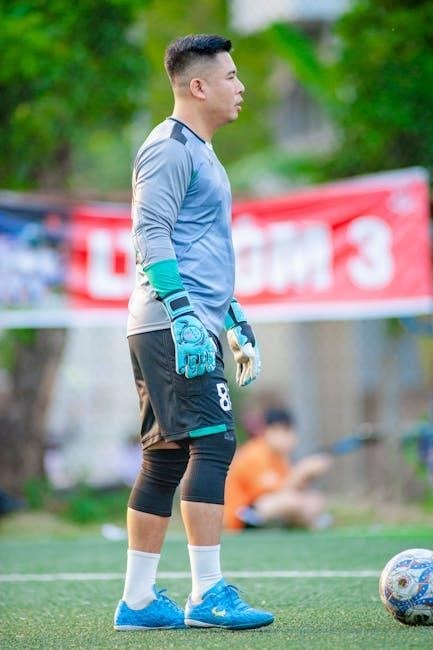
Goalkeeper training demands a specialized approach, distinct from general player development․ This position requires a unique blend of athleticism, courage, technical skill, and mental fortitude․ A dedicated soccer goalkeeper training program, often compiled into a PDF for easy access, is crucial for nurturing these attributes․
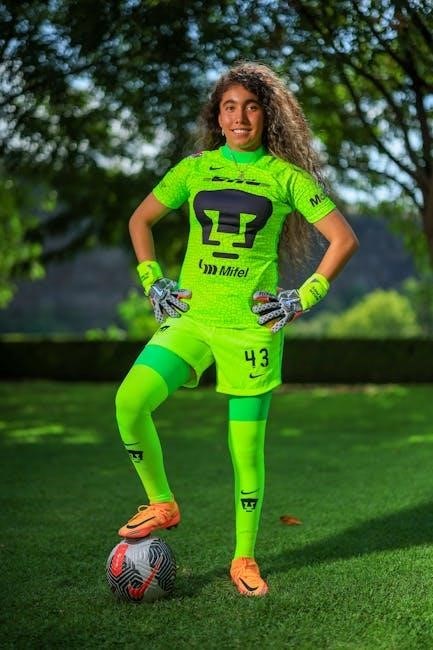
Effective training isn’t merely about repetitive drills; it’s about building a well-rounded goalkeeper․ This involves mastering fundamental ball-handling techniques, developing explosive reflexes, honing positional awareness, and cultivating the ability to command the penalty area․ The drills within a comprehensive plan progressively challenge the goalkeeper, simulating game-like scenarios to enhance decision-making under pressure․
Whether coaching youth players rotating through the position or specialized goalkeepers, a structured curriculum is paramount․ A well-designed PDF training guide provides coaches with a roadmap, outlining sessions focused on specific skills – diving, shot-stopping, distribution, and dealing with crosses – ensuring consistent and targeted improvement․
II․ Essential Equipment for Goalkeeper Drills
Successful goalkeeper training necessitates specific equipment beyond standard soccer gear․ A quality soccer ball is fundamental, with varying sizes appropriate for different age groups․ Goalkeeping gloves are paramount, providing protection and enhancing grip – multiple pairs are recommended for varying weather conditions․ Cones and markers are vital for setting up drills, defining areas, and simulating angles․
Additional beneficial equipment includes a goalkeeper training net, offering a dedicated target for distribution practice․ Agility ladders and hurdles improve footwork and quickness, crucial for reactive movements․ A first-aid kit is non-negotiable, addressing potential injuries during dynamic drills․
When utilizing a PDF training guide, coaches should verify equipment lists align with the drill requirements․ Proper equipment ensures safety, maximizes drill effectiveness, and allows goalkeepers to focus on skill development without distraction․ Investing in quality gear is an investment in player progress;
III․ Warm-Up Drills for Goalkeepers
Effective warm-ups are crucial for goalkeeper training, preparing the body for demanding drills and minimizing injury risk․ A PDF training plan should prioritize dynamic stretching, focusing on range of motion in shoulders, hips, and legs․ These movements mimic goalkeeping actions, increasing blood flow and muscle elasticity․
Basic ball handling exercises are also essential, integrating gentle throws and catches to activate reflexes and hand-eye coordination․ These drills serve as a practical warm-up, transitioning players into goalkeeping-specific movements․
Progressive intensity is key; start with low-impact activities and gradually increase the challenge․ A well-structured warm-up, detailed in a soccer goalkeeper training PDF, primes the goalkeeper physically and mentally for a productive session․
III․A․ Dynamic Stretching for Goalkeepers
Dynamic stretching is paramount in a goalkeeper’s warm-up, preparing muscles for explosive movements․ A soccer goalkeeper training PDF should detail stretches like arm circles, leg swings, and torso twists, performed with controlled motion․ These aren’t held; instead, they focus on actively moving through a full range of motion․
Specific exercises should target areas vital for goalkeeping: shoulder rotations for throwing, hip circles for agility, and hamstring stretches for diving․ These movements enhance flexibility and prevent injuries;
The PDF should emphasize proper form and controlled execution․ Dynamic stretches increase blood flow and muscle temperature, optimizing performance and reducing the risk of strains during more intense drills․
III․B․ Basic Ball Handling Warm-Up
A soccer goalkeeper training PDF must include a progressive ball handling warm-up․ Start with simple repetitions – gently tossing the ball and catching it with both hands, focusing on soft hands and secure grip․ Progress to underhand throws, gradually increasing distance and speed․
Introduce ball rolls along the ground, encouraging the goalkeeper to react quickly and maintain a low center of gravity․ This builds foundational skills and reflexes․ The PDF should detail drills where the goalkeeper receives passes from a short distance, emphasizing clean catches․
These drills aren’t about power; they’re about control and technique․ Proper form is crucial, establishing a solid base for more advanced handling exercises․
IV․ Core Ball Handling Skills
A comprehensive soccer goalkeeper training PDF dedicates significant attention to core ball handling․ These skills are the foundation of a confident and reliable goalkeeper․ Drills should focus on developing soft hands, quick reactions, and secure grip strength․
Essential techniques include fingertip control, ensuring the goalkeeper can absorb the ball’s momentum․ Proper catching technique, forming a ‘W’ shape with the hands, is paramount․ Secure handling drills, like the basket catch, build confidence in retaining possession․
The PDF should emphasize consistent practice of these fundamentals, building muscle memory and instinctive reactions․ Mastering these skills minimizes errors and maximizes control during game situations․
IV․A․ Finger Tip Control Drills
A soccer goalkeeper training PDF will detail fingertip control drills as crucial for absorbing impact and preventing rebounds․ These drills begin with simple underhand tosses, focusing on a soft touch and relaxed hands․ Progress to higher tosses and varied speeds, challenging the goalkeeper’s reaction time․
Coaches should emphasize keeping fingers spread and slightly bent, creating a larger surface area․ Drills can incorporate partner throws from short distances, gradually increasing the power and angle․ The PDF should highlight the importance of ‘giving’ with the ball, rather than rigidly meeting it․
Consistent practice builds the necessary dexterity and sensitivity, allowing the goalkeeper to confidently handle a wide range of shots and crosses․
IV․B․ Catching Technique Drills
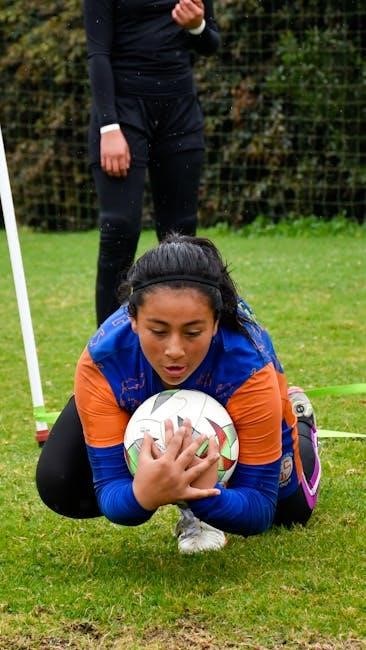
A comprehensive soccer goalkeeper training PDF will emphasize proper catching technique as foundational․ Drills start with stationary catches, focusing on forming a ‘W’ shape with the hands to create a secure pocket․ Coaches should stress bringing the ball into the chest, cushioning the impact and preventing drops․
Progress to catching while moving laterally, maintaining the ‘W’ shape and proper hand positioning․ The PDF should include drills with varying ball heights, forcing the goalkeeper to adjust their technique․ Emphasis should be placed on soft hands and a relaxed grip, avoiding tension․
Repetition builds muscle memory and confidence, enabling clean, secure catches under pressure․
IV․C․ Secure Handling Drills (W-Shape, Basket Catch)
A robust soccer goalkeeper training PDF dedicates significant attention to secure handling, utilizing both the ‘W-shape’ and ‘basket catch’ techniques․ Drills involve coaches throwing balls at varying speeds and angles, demanding quick reactions and precise hand positioning․
The ‘W-shape’ drill focuses on creating a large target area, while the ‘basket catch’ emphasizes cradling the ball against the body for ultimate security․ PDF resources should detail proper finger placement and wrist action for each technique․
Progressive drills introduce distractions and pressure, simulating game-like scenarios․ Consistent practice builds confidence and minimizes fumbles, crucial for reliable goalkeeping performance․
V․ Diving and Extension Drills
A comprehensive soccer goalkeeper training PDF will heavily emphasize diving and extension drills, foundational for covering the goal effectively․ These drills progress from basic technique to reactive saves, building both confidence and physical conditioning․
Initial exercises focus on proper falling technique – maintaining a low center of gravity, extending the body, and protecting the head․ Extension drills then challenge reach, requiring goalkeepers to stretch and secure balls at the periphery of their range․
The PDF should outline drills incorporating coach-led throws and player-initiated movements, simulating game scenarios․ Mastering these skills is vital for preventing goals and controlling the penalty area․
V․A․ Basic Diving Technique Drills
A quality soccer goalkeeper training PDF begins diving instruction with foundational technique․ These drills prioritize safety and proper form before introducing speed or reaction․ Coaches should start with ‘fall and scoop’ exercises, emphasizing a controlled descent and secure ball capture․
Drills involve side-to-side dives across a short distance, focusing on the correct hand position – a ‘W’ shape for secure handling․ Progression includes increasing the dive distance and incorporating a slight angle․ The PDF should stress tucking the chin and protecting the head during the fall․
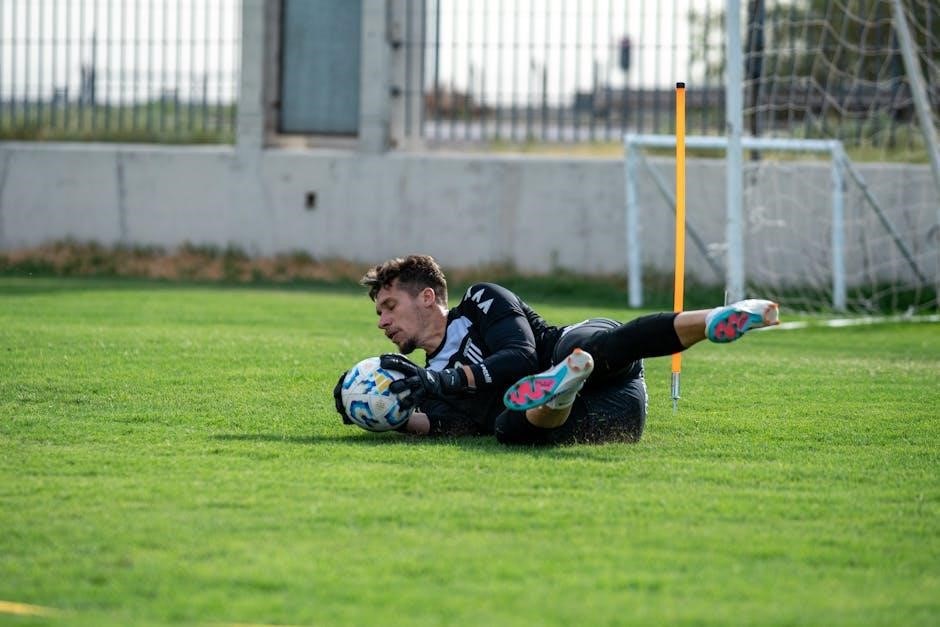
Repetition is key; these drills build muscle memory and instill confidence․ Proper technique minimizes injury risk and maximizes the goalkeeper’s reach and control․
V․B․ Extension Diving Drills (Low & High)
A comprehensive soccer goalkeeper training PDF progresses to extension dives, challenging reach and agility․ Low extension drills involve reacting to ground-level shots, emphasizing a powerful push-off and full extension of the body․ Coaches should focus on maintaining a strong core and extending through the fingertips․
High extension drills simulate crosses or shots aimed towards the upper corners․ These require a higher jump and greater reach․ The PDF should detail proper arm positioning – reaching as high as possible while maintaining control․ Safety is paramount; ensure a soft landing surface․
These drills build explosive power and improve the goalkeeper’s ability to cover a wider area of the goal․ Consistent practice enhances reaction time and confidence in challenging situations․
V․C․ Reaction Diving Drills
A robust soccer goalkeeper training PDF must incorporate reaction diving drills, crucial for unpredictable game scenarios․ These drills focus on minimizing thinking time and maximizing instinctive responses․ A coach can use varied ball delivery – quick throws, short volleys – to simulate realistic shots․
The PDF should emphasize a quick set position, a focused gaze, and an explosive reaction․ Drills can start with close-range reactions, gradually increasing distance and shot power․ It’s vital to prioritize proper technique over simply reaching the ball․
Reaction drills build mental agility and improve the goalkeeper’s ability to make split-second decisions․ Consistent practice enhances reflexes and builds confidence in challenging, fast-paced situations․
VI․ Shot Stopping Drills
A comprehensive soccer goalkeeper training PDF dedicates significant attention to shot-stopping drills, the core of the position․ These drills should progress from basic saves to complex scenarios, simulating game pressure․ The PDF must detail drills focusing on proper positioning, angle play, and quick reflexes․
Essential drills include reacting to close-range shots, dealing with driven balls, and extending to cover wider angles․ Coaches should emphasize the ‘W’ shape technique for efficient movement and balance․ Incorporating varying shot heights and speeds is crucial for adaptability․
Effective shot-stopping drills build confidence and refine technique, enabling goalkeepers to consistently make crucial saves and control the penalty area․
VI․A․ Angle Play and Positioning Drills
A robust soccer goalkeeper training PDF will prioritize angle play and positioning drills, foundational to effective shot-stopping․ These drills emphasize reducing the shooter’s target area by moving laterally and forward․ The PDF should illustrate drills where the goalkeeper reacts to a stationary ball and then to live shots from various distances․
Coaches should focus on the ‘near post’ and ‘far post’ concepts, teaching goalkeepers to anticipate shot placement․ Drills should involve cones to mark optimal positioning points, reinforcing visual cues․ Emphasize quick footwork and maintaining a balanced stance․
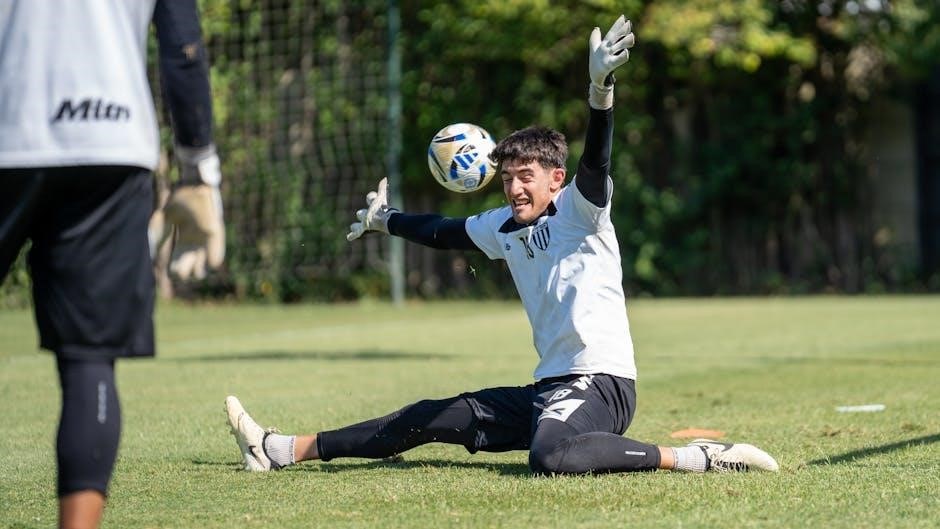
Mastering angle play minimizes the space attackers have to score, significantly increasing the goalkeeper’s success rate and overall defensive stability․
VI․B․ Reflex Save Drills (Close Range)
A comprehensive soccer goalkeeper training PDF must include intense reflex save drills, particularly focusing on close-range situations․ These drills simulate the rapid reactions needed during one-on-one encounters and rebounds․ The PDF should detail drills where a coach or teammate shoots from within the penalty area, varying shot height and speed․
Emphasis should be placed on hand-eye coordination, quick footwork to adjust position, and explosive power to extend for saves․ Drills can incorporate reaction balls to enhance unpredictability and improve response time․ Goalkeepers must practice collapsing quickly and maintaining a strong hand position․
Consistent practice of these drills builds muscle memory and sharpens reflexes, crucial for denying scoring opportunities in high-pressure moments․
VI․C․ Dealing with Driven Shots
A robust soccer goalkeeper training PDF needs dedicated drills for handling powerfully driven shots․ These shots demand a different technique than softer balls, requiring the goalkeeper to brace for impact and secure the ball effectively․ The PDF should outline drills where players shoot with maximum velocity from various distances․
Focus should be on proper hand positioning – forming a strong ‘W’ shape or basket – to absorb the shot’s force and prevent rebounds․ Drills should also emphasize quick reactions to adjust to the shot’s trajectory and minimize movement․
Goalkeepers must learn to confidently catch or parry driven shots, maintaining control and preventing follow-up opportunities․ Consistent practice builds the strength and technique needed to handle these challenging attempts․
VII․ Footwork and Agility Drills
A comprehensive soccer goalkeeper training PDF must prioritize footwork and agility, as these are foundational for quick reactions and efficient movement․ Drills should focus on developing lateral speed, explosive power, and precise positioning․ The PDF should include exercises like cone drills, ladder drills, and shuttle runs, specifically adapted for goalkeepers․
Emphasis should be placed on maintaining a low center of gravity, quick foot transitions, and efficient shuffling techniques․ These drills enhance the goalkeeper’s ability to cover the goalmouth effectively and react to changing play․
Agility drills improve the goalkeeper’s responsiveness, allowing them to quickly adjust to shots, crosses, and through balls, ultimately improving their overall performance․
VII․A․ Lateral Movement Drills
Soccer goalkeeper training PDF resources should dedicate significant attention to lateral movement drills․ These drills are crucial for covering the width of the goal and reacting to quick changes in direction․ Cone drills, arranged in a line or zig-zag pattern, are excellent for practicing shuffling and crossover steps․
The PDF should detail drills where goalkeepers react to a coach’s signal, quickly moving laterally to reach a designated point․ Emphasis should be on maintaining a low stance, keeping feet shoulder-width apart, and using short, choppy steps for maximum agility․
Incorporating resistance bands can further enhance lateral strength and power․ These drills build the foundation for explosive movements and efficient positioning during game situations․
VII․B․ Quick Feet Drills for Goalkeepers
A comprehensive soccer goalkeeper training PDF must include a section dedicated to quick feet drills․ These drills enhance a goalkeeper’s ability to make rapid adjustments, crucial for reacting to deflections and close-range shots․ Ladder drills are highly effective, focusing on foot speed, coordination, and agility․
The PDF should outline variations like in-and-out steps, lateral shuffles through the ladder, and hopscotch patterns․ Cone drills, utilizing small cones placed closely together, also promote quick footwork and precise movements․
These drills should be performed with a focus on maintaining a low center of gravity and explosive power․ Integrating these drills into warm-ups prepares goalkeepers for the demands of a match․
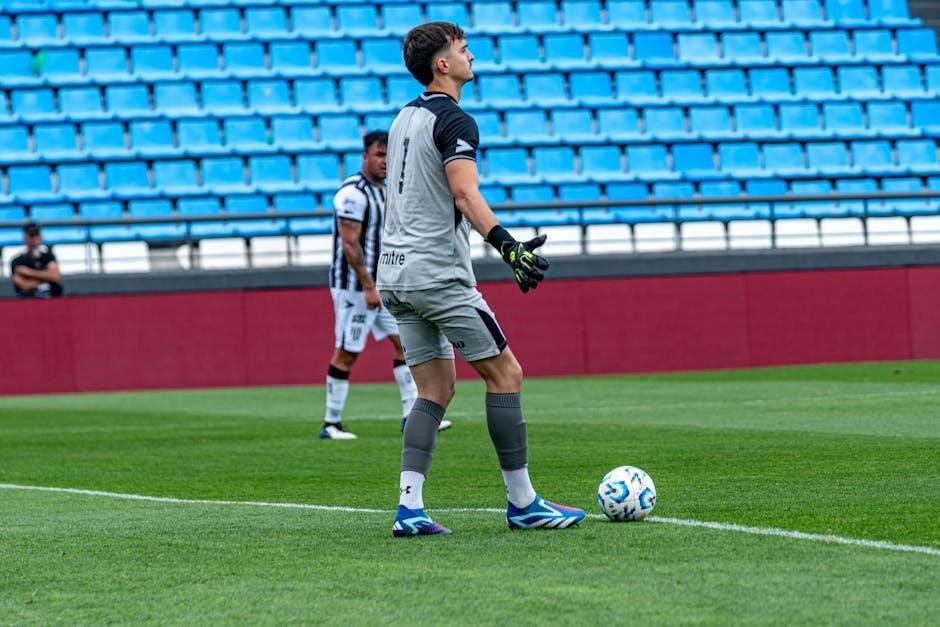
VII․C․ Shuffle Step Drills
A robust soccer goalkeeper training PDF will dedicate a section to shuffle step drills, vital for efficient lateral movement and covering the goal․ These drills emphasize maintaining a balanced stance while quickly shifting side-to-side, mimicking the demands of reacting to crosses and angled shots․
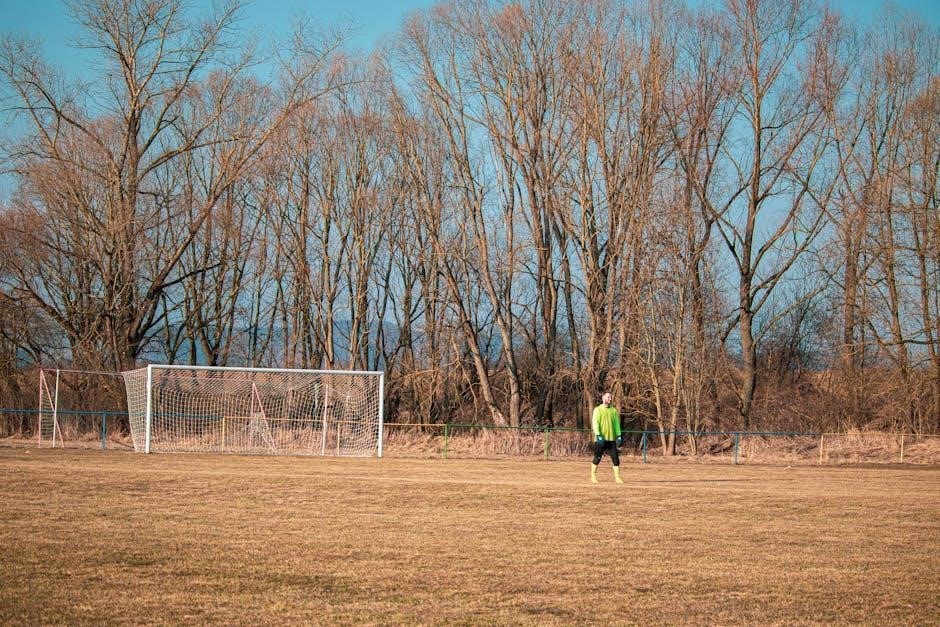
The PDF should detail drills involving shuffling between cones, reacting to a coach’s directional cues, and mirroring an attacker’s movements․ Emphasis should be placed on keeping feet low, maintaining a slight bend in the knees, and avoiding crossing the feet․
Progressions can include adding a ball to handle simultaneously, increasing the complexity and simulating game-like scenarios․ Mastering the shuffle step is fundamental for agile goalkeeping․
VIII․ Distribution Drills
A comprehensive soccer goalkeeper training PDF must include a dedicated section on distribution, recognizing its crucial role in initiating attacks․ These drills move beyond simply clearing the ball, focusing on accuracy, distance, and decision-making under pressure․
The PDF should outline drills for both throwing and kicking techniques – punts, drop kicks, and rolling distributions․ Emphasis should be placed on proper form, utilizing the core for power, and selecting the appropriate distribution method based on field position and teammate availability․
Progressions involve adding defenders to apply pressure, forcing the goalkeeper to make quick decisions and execute distributions accurately while under duress․ Effective distribution is a key component of modern goalkeeping․
VIII․A․ Throwing Technique Drills
A quality soccer goalkeeper training PDF will dedicate specific drills to refining throwing technique․ These drills begin with foundational movements, emphasizing a proper grip, arm action, and follow-through for optimal distance and accuracy․
Drills should progress from stationary throws to throws after footwork movements, simulating game-like scenarios․ Coaches should focus on the goalkeeper’s body positioning, ensuring a stable base and efficient transfer of weight․ Variations include throwing to static targets and moving teammates․
The PDF should also incorporate drills that challenge the goalkeeper to throw with varying levels of power and trajectory, adapting to different passing distances and tactical situations․ Accuracy and quick release are paramount․
VIII․B․ Kicking Technique Drills (Punt, Drop Kick)
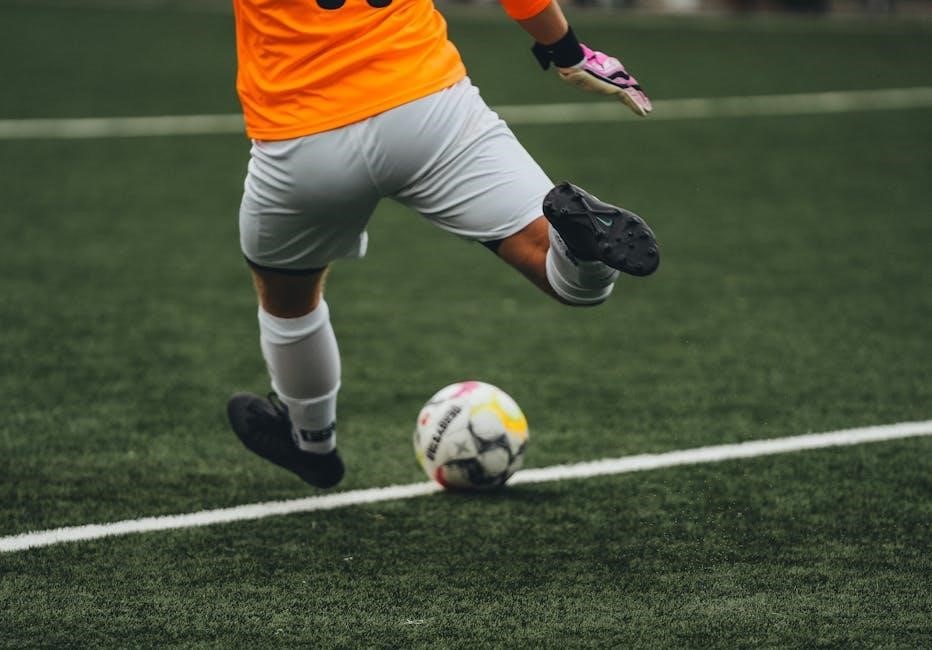
A comprehensive soccer goalkeeper training PDF must include detailed drills for both punting and drop-kicking․ These drills should initially focus on proper form – plant foot placement, swing path, and contact point – to maximize distance and accuracy․
Punting drills progress from stationary kicks to approaches with varying step lengths, emphasizing a smooth, coordinated motion․ Drop-kick drills concentrate on a clean strike and generating power from the hips and core․ The PDF should highlight the differences between the techniques․
Advanced drills involve kicking under pressure, targeting specific areas of the field, and adapting to different ball placements․ Coaches should emphasize consistency and the ability to execute these kicks effectively in game situations․
VIII․C․ Distribution Under Pressure Drills
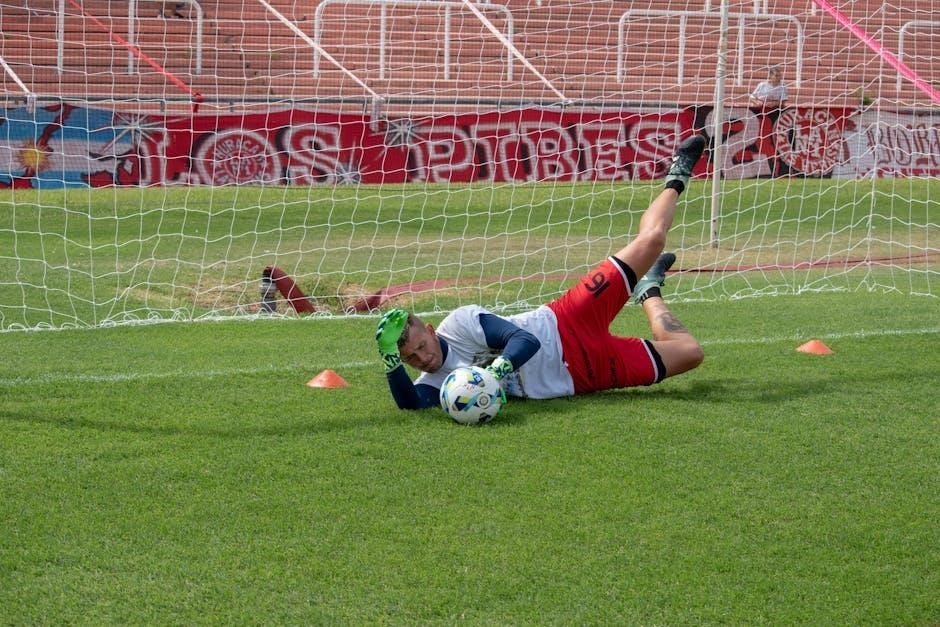
A robust soccer goalkeeper training PDF necessitates drills simulating game pressure during distribution․ These drills move beyond simple passing, introducing defenders applying immediate pressure upon the goalkeeper’s initial touch․
Drills should incorporate varying pressure levels – passive resistance, controlled harassment, and full-intensity challenges – forcing quick decision-making and accurate execution․ The PDF should detail scenarios requiring short, quick passes versus longer, lofted distributions․
Coaches should emphasize scanning the field for available targets, choosing the appropriate distribution method, and maintaining composure under duress․ These drills build confidence and refine the goalkeeper’s ability to initiate attacks effectively․
IX․ Dealing with Crosses and Set Pieces
A comprehensive soccer goalkeeper training PDF must dedicate significant attention to crosses and set pieces, arguably the most challenging scenarios․ Drills should focus on aggressive claiming of crosses, utilizing proper jumping technique, and securing the ball cleanly․
The PDF should detail drills practicing punching techniques – when to punch, where to punch, and how to generate power and distance․ Emphasis should be placed on clearing the ball away from danger, not simply deflecting it․
Furthermore, the document needs to cover organizing the defense, communicating effectively, and anticipating the flight of the ball․ Drills simulating various crossing angles and set-piece deliveries are crucial for developing a commanding presence in the box․
IX․A․ Claiming Crosses Drills
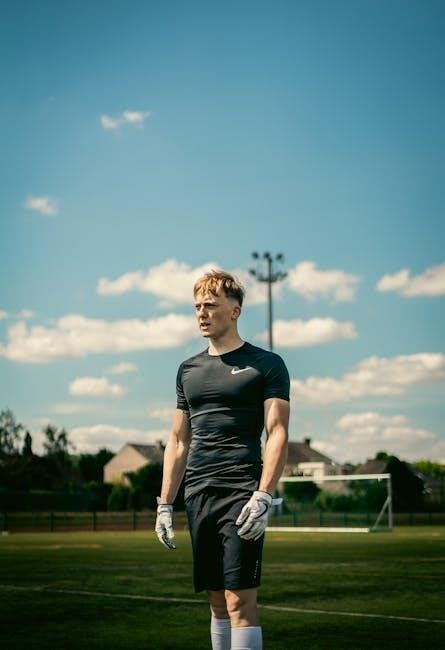
Soccer goalkeeper training PDFs should include drills progressively increasing in difficulty for claiming crosses․ Start with stationary crosses from a coach, focusing on footwork to get into the optimal position and a strong, high jump․
Progress to dynamic crosses delivered by players at varying speeds and angles․ Drills should emphasize attacking the ball, using hands to create a ‘basket’ for a secure catch, and landing safely․ Introduce defensive pressure to simulate game conditions․
A key drill involves the goalkeeper calling for the cross, communicating with defenders, and confidently claiming possession․ Variations include crosses with varying amounts of spin and flight, challenging the goalkeeper’s judgment and reaction time․
IX․B․ Punching Technique Drills
Soccer goalkeeper training PDF resources must detail proper punching technique․ Drills begin with stationary balls, emphasizing a strong fist shape, elbow drive, and aiming to clear the ball away from the danger area – not just upwards․
Progress to coach-delivered crosses, focusing on timing the punch, maintaining balance, and following through with the arm motion․ Introduce varying heights and speeds of crosses to challenge the goalkeeper’s reactions;
Drills should incorporate quick footwork to get into the correct punching position․ Emphasize punching through the ball, not at it, for maximum distance and control․ Defensive pressure can be added to simulate game scenarios, requiring quick decision-making․
X․ Game Situation Drills
Soccer goalkeeper training PDF guides highlight the importance of bridging the gap between isolated drills and live game action․ These drills simulate realistic scenarios, demanding quick thinking and decisive action from the goalkeeper․
1v1 drills are crucial, starting with the goalkeeper positioned statically, then progressing to movement and angle play․ Small-sided games (e․g․, 3v2, 4v3) integrate the goalkeeper fully, forcing them to distribute the ball under pressure and make saves in a dynamic environment․
Focus on communication, organization of the defense, and reacting to rebounds․ These drills should replicate game tempo and intensity, preparing the goalkeeper mentally and physically for match day․
X․A․ 1v1 Drills for Goalkeepers
Soccer goalkeeper training PDF resources emphasize 1v1 drills as fundamental for developing shot-stopping reflexes and decision-making․ Begin with the attacker starting from a designated point, allowing the goalkeeper to practice initial positioning and closing down angles․
Progress to the attacker dribbling towards the goalkeeper, forcing quick reactions and footwork․ Variations include limiting the goalkeeper’s movement, or allowing full range․ Coaches should focus on the goalkeeper’s technique – staying balanced, presenting a large target, and reacting to fakes․
Introduce different finishing techniques from the attacker (side-foot, laces, chip) to challenge the goalkeeper’s adaptability․ These drills build confidence and improve the ability to handle one-on-one situations effectively․
X․B․ Small-Sided Game Integration
Soccer goalkeeper training PDF guides highlight the importance of integrating goalkeepers into small-sided games for realistic practice․ These games, such as 3v3 or 5v5 with a goalkeeper, simulate game pressure and demand quick decision-making․
Focus on scenarios requiring distribution – quick throws to start counter-attacks, or accurate punts to relieve pressure․ Encourage communication between the goalkeeper and defenders․ Coaches should observe the goalkeeper’s positioning, reactions to shots, and overall game management skills․
Adjust game rules to emphasize specific skills, like limiting touches to force faster reactions․ This integration bridges the gap between isolated drills and real match situations, fostering a more complete goalkeeper․
XI․ Goalkeeper Fitness Training
Soccer goalkeeper training PDF resources emphasize a specialized fitness regime․ Unlike outfield players, goalkeepers require explosive power, agility, and repeated high-intensity bursts․ Training should incorporate plyometrics – box jumps, bounding – to enhance jumping ability for reaching high shots and quick reactions․
Core strength is crucial for stability during dives and powerful throws․ Include exercises like planks, Russian twists, and medicine ball work․ Agility drills, such as cone drills and shuttle runs, improve lateral movement and reaction time․
Endurance training, while important, should focus on interval training to mimic game demands․ A goalkeeper’s fitness must support their technical skills throughout a match․
XII․ Sample Goalkeeper Training Session (PDF Structure)
Soccer goalkeeper training PDF guides often present structured sessions․ A typical 90-minute session begins with a 15-minute dynamic warm-up, including goalkeeper-specific movements and basic ball handling․ Next, 20 minutes focus on core skills – catching, handling, and footwork drills․
A 30-minute block is dedicated to shot-stopping, incorporating angle play and reflex saves․ The session then transitions to distribution practice (15 minutes), working on throwing and kicking technique․ Finally, a 10-minute cool-down with static stretching concludes the session․
PDF resources detail drill setups, coaching points, and progressions, allowing coaches to adapt sessions to player levels and available resources․