
Astrophysics for People in a Hurry: A Resource Guide
Navigating astrophysics demands accessible resources․ Bennett’s text is ideal for beginners‚ while Carroll & Ostlie’s “BOB” offers depth․
Strobel’s website provides introductory material for quick learning․
Understanding Introductory Texts
For those beginning their astrophysics journey‚ selecting the right introductory text is crucial․ Bennett’s “The Essential Cosmic Perspective” stands out as a highly recommended starting point‚ readily available through online retailers like Amazon․ It’s designed for an astronomy 101-level understanding‚ making complex concepts approachable for newcomers․
Be aware that “BOB” assumes some prior knowledge of college-level physics and mathematics․ Supplementing your learning with online resources like Nick Strobel’s “Astronomy Notes” (www․astronomynotes․com) can provide valuable introductory material and support your understanding of core concepts․
Bennett’s “The Essential Cosmic Perspective”
Bennett’s “The Essential Cosmic Perspective” excels as an ideal entry point for those new to astronomy․ It’s frequently recommended as a textbook for introductory astronomy courses‚ making it a solid foundation for self-study as well․ The book’s strength lies in its ability to present complex astrophysical ideas in a clear‚ accessible manner‚ avoiding overly technical jargon․
This text is particularly well-suited for individuals without a strong background in physics or mathematics․ It focuses on conveying the fundamental concepts of the universe‚ from planets and stars to galaxies and cosmology‚ using engaging visuals and relatable examples․
While not as mathematically rigorous as more advanced texts‚ it provides a strong conceptual understanding‚ preparing readers for further exploration of the field․ It’s easily obtainable through online booksellers‚ offering a convenient starting point for anyone eager to learn about the cosmos․
Often considered a cornerstone undergraduate textbook‚ it’s a comprehensive resource covering nearly all foundational aspects of astrophysics․ However‚ prospective readers should be aware that BOB demands a solid grounding in college-level physics and mathematics before diving in․
With approximately 30 chapters‚ the book delves into a wide range of topics‚ providing detailed explanations and mathematical derivations․ It’s a substantial volume‚ earning its nickname “The Big Orange Book” due to its size and color․ While incredibly thorough‚ it may not be the best choice for a casual introduction․
BOB serves as an excellent reference and starting point for researching unfamiliar concepts‚ even for those with some astrophysical knowledge․ It’s a gold standard for serious students of the subject․
Nick Strobel’s Astronomy Notes
For those seeking a readily accessible and free online resource‚ Nick Strobel’s Astronomy Notes (www․astronomynotes․com) provides a valuable entry point into the world of astrophysics․ This website offers well-structured‚ introductory-level material‚ making it an ideal complement to textbooks or a standalone resource for self-study․
Strobel’s notes are particularly useful for individuals who prefer a more concise and direct approach to learning․ The content is presented in a clear and organized manner‚ covering fundamental concepts in astronomy and astrophysics without getting bogged down in excessive mathematical detail․
It’s a fantastic option for quickly grasping the basics or for reinforcing concepts learned elsewhere․ The site’s accessibility and ease of navigation make it a popular choice among students and enthusiasts alike‚ offering a convenient way to explore the cosmos․

Core Concepts Covered in Standard Texts
Standard astrophysics texts delve into observational techniques‚ cosmic ray origins‚ and the intricate processes of star formation and stellar evolution‚ providing a robust foundation․
Observational Astrophysics
Observational astrophysics forms the bedrock of our understanding‚ relying on collecting and analyzing electromagnetic radiation across the spectrum․ Standard texts meticulously cover the tools and techniques used – telescopes‚ spectrographs‚ and detectors – to gather data from distant celestial objects․ These resources detail how astronomers measure properties like brightness‚ temperature‚ and composition․
Crucially‚ texts explain the challenges posed by Earth’s atmosphere and the necessity of space-based observatories․ They explore concepts like redshift and blueshift‚ vital for determining the motion and distance of galaxies․ Furthermore‚ they discuss image processing techniques used to enhance and interpret astronomical data․
Understanding observational limitations and systematic errors is also emphasized‚ ensuring a critical approach to interpreting results․ The initial chapters of comprehensive texts often dedicate significant space to these fundamental principles‚ setting the stage for more advanced topics;
Cosmic Rays and Their Origin
Cosmic rays‚ high-energy particles bombarding Earth‚ present a fascinating puzzle in astrophysics․ Introductory texts explain their discovery and the initial challenges in determining their origin․ They detail how these particles interact with Earth’s magnetic field‚ leading to phenomena like air showers․ Standard resources cover the composition of cosmic rays – primarily protons‚ but also heavier nuclei – and their energy spectrum․
The search for cosmic ray sources is a central theme‚ with potential candidates including supernova remnants‚ active galactic nuclei‚ and gamma-ray bursts․ Texts discuss the acceleration mechanisms believed to be responsible for boosting particles to such extreme energies‚ like Fermi acceleration․
Furthermore‚ they explore the role of cosmic rays in interstellar medium heating and ionization․ Understanding cosmic rays provides insights into high-energy processes occurring throughout the universe‚ making it a crucial topic in astrophysical study․

Star Formation Processes
Star formation‚ a cornerstone of astrophysics‚ begins with the gravitational collapse of molecular clouds – vast‚ cold regions of gas and dust․ Introductory texts detail the Jeans instability‚ the critical condition for collapse to occur․ They explain how turbulence and magnetic fields influence this process‚ often hindering direct collapse and leading to fragmentation․
Protostars emerge as the collapsing material heats up‚ eventually igniting nuclear fusion in their cores․ Texts cover the T Tauri phase‚ characterized by strong stellar winds and accretion disks․ These disks play a vital role in planet formation‚ a closely related topic․
Understanding the initial mass function – the distribution of stellar masses – is crucial‚ as it dictates the types of stars that form․ Resources also explore the impact of stellar feedback‚ where newly formed stars influence their surrounding environment‚ regulating further star formation․
Stellar Evolution
Stellar evolution describes the life cycle of stars‚ from their birth in molecular clouds to their eventual demise․ Introductory texts explain how stars spend most of their lives on the main sequence‚ fusing hydrogen into helium in their cores․ The position on the main sequence is determined by a star’s mass․
As stars exhaust their hydrogen fuel‚ they evolve off the main sequence‚ expanding into red giants or supergiants․ Texts detail the various fusion processes that occur in these later stages‚ creating heavier elements․ The fate of a star depends heavily on its initial mass․
Lower-mass stars like our Sun eventually become white dwarfs‚ while more massive stars undergo supernova explosions‚ leaving behind neutron stars or black holes․ Resources cover these dramatic endpoints and the role of stellar remnants in enriching the interstellar medium․

Bridging the Gap: Accessible Resources
For broader understanding‚ Suskind’s lectures‚ Alvarez’s work‚ and Muller’s outreach offer engaging astrophysics insights․ These resources complement textbook learning effectively․
Suskind’s Lectures on Astrophysics
Leonard Suskind’s lectures represent a phenomenal entry point for those seeking a deeper grasp of astrophysical concepts without the rigorous demands of a formal undergraduate curriculum․ His approach skillfully blends theoretical explanations with intuitive visualizations‚ making complex topics surprisingly accessible․ Suskind doesn’t shy away from the mathematical underpinnings of astrophysics‚ but he presents them in a way that prioritizes conceptual understanding․
Louie Alvarez’s Contributions to the Field
Luis Walter Alvarez‚ a Nobel laureate‚ significantly impacted astrophysics through his innovative experimental techniques and interdisciplinary approach․ While not solely focused on theoretical astrophysics‚ his work on cosmic rays and particle physics profoundly influenced our understanding of high-energy phenomena in the universe․ Alvarez pioneered the use of particle accelerators to study cosmic ray interactions‚ providing crucial insights into their origin and composition․
His research extended beyond traditional astrophysics‚ notably his involvement in the iridium anomaly linked to the Cretaceous–Paleogene extinction event‚ demonstrating the impact of extraterrestrial events on Earth’s history․ Alvarez’s legacy lies in his willingness to tackle challenging problems with unconventional methods‚ fostering a spirit of innovation that continues to drive astrophysical research․ Exploring his contributions offers a unique perspective‚ highlighting the importance of experimental physics in unraveling the mysteries of the cosmos‚ even for those seeking a concise overview․
Richard Muller’s Public Outreach
Richard Muller stands out for his dedication to making astrophysics accessible to a wider audience‚ bridging the gap between complex scientific concepts and public understanding․ He’s renowned for his engaging lectures and clear explanations‚ effectively communicating the wonders of the universe without sacrificing scientific rigor․ Muller’s commitment extends beyond traditional academic settings‚ actively participating in public outreach programs and utilizing various media platforms to disseminate knowledge․
His efforts are particularly valuable for individuals seeking a “astrophysics for people in a hurry” approach – providing digestible insights into complex topics․ Muller’s work emphasizes the importance of scientific literacy and encourages critical thinking about the cosmos․ He skillfully translates intricate astrophysical phenomena into relatable terms‚ fostering a sense of curiosity and inspiring the next generation of scientists and enthusiasts․ His approach complements formal education and provides a valuable resource for lifelong learning․

Advanced Undergraduate Texts
For serious study‚ Carroll & Ostlie’s “Modern Astrophysics” is the gold standard‚ though Ryden’s “Foundations of Astrophysics” offers a more approachable‚ easier entry point․

“Modern Astrophysics” by Carroll & Ostlie ⎯ A Gold Standard
stands as a cornerstone text for undergraduate astrophysics programs․ This comprehensive volume‚ encompassing nearly 30 chapters‚ delves into almost all fundamental aspects of the field․ However‚ prospective readers should possess a solid foundation in college-level physics and mathematics before tackling its complexities․
While incredibly thorough‚ “BOB” might not provide the extreme detail required for specialized‚ upper-level courses – those typically have dedicated recommended texts․ Nevertheless‚ it serves as an invaluable resource for quickly grasping unfamiliar concepts or identifying areas needing further investigation․ It’s a substantial book‚ a “massive lump” as one student described it‚ but its breadth makes it a superb starting point for any astrophysical inquiry․
Consider it a go-to reference for understanding the broader context‚ even if subsequent coursework demands more focused study․ It truly is the gold standard for a reason․
Ryden’s “Foundations of Astrophysics” ⎯ Easier Approach
Barbara Ryden’s “Foundations of Astrophysics” presents a more accessible pathway into the subject compared to the demanding “Modern Astrophysics” by Carroll & Ostlie․ Specifically designed for undergraduate astrophysics students‚ Ryden’s text prioritizes clarity and ease of understanding without sacrificing core concepts․ It’s an excellent choice for those seeking a gentler introduction to the field’s mathematical and physical underpinnings․
While still rigorous‚ “Foundations of Astrophysics” avoids the intense depth of “BOB‚” making it less intimidating for students initially grappling with complex astrophysical principles․ It effectively bridges the gap between introductory astronomy and advanced undergraduate coursework․ This book is a strong contender for those who find Carroll & Ostlie’s volume overwhelming or prefer a more streamlined learning experience․
Ryden’s approach fosters a solid base for further study‚ preparing students for more specialized topics later in their academic journey․

Textbook Features & Focus
Key texts emphasize physical fundamentals‚ covering observational astrophysics‚ cosmic rays‚ star formation‚ and evolution․ Comprehensive coverage of quantities is vital for understanding universal processes․
Physical Fundamentals of Universal Processes
Understanding the cosmos hinges on grasping core physical principles․ Introductory texts‚ like Bennett’s “The Essential Cosmic Perspective‚” often begin by establishing these foundations․ These fundamentals encompass gravity‚ electromagnetism‚ thermodynamics‚ and quantum mechanics – the building blocks governing celestial phenomena․
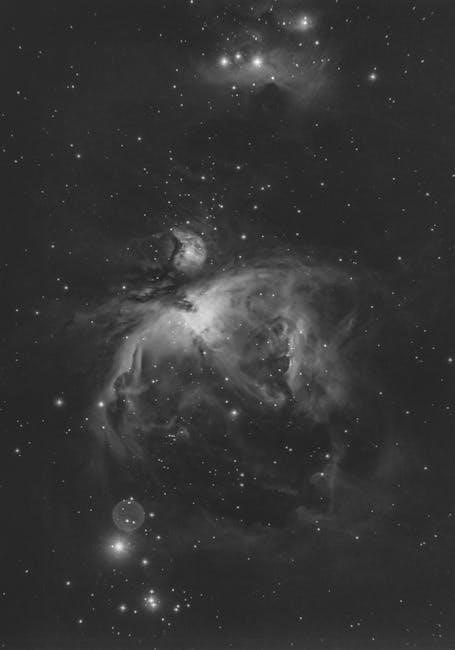
A strong grasp of these physical laws is crucial for interpreting observational data and constructing theoretical models․ Resources like Nick Strobel’s Astronomy Notes offer accessible explanations of these concepts‚ bridging the gap between complex theory and intuitive understanding;
Ultimately‚ appreciating the physical fundamentals empowers one to unravel the mysteries of the universe‚ even with limited time for dedicated study․
Comprehensive Coverage of Astrophysical Quantities
Astrophysics relies heavily on quantifying celestial objects and events․ Standard texts meticulously cover essential quantities like luminosity‚ mass‚ temperature‚ and redshift․ Bennett’s introductory work presents these concepts in an accessible manner‚ focusing on their observational implications․

Understanding these quantities isn’t merely about memorizing numbers; it’s about interpreting their significance within the broader cosmic context․ Nick Strobel’s Astronomy Notes offer supplementary explanations‚ aiding comprehension․
A solid grasp of astrophysical quantities is fundamental to both theoretical modeling and observational analysis‚ enabling a deeper understanding of the universe․
Depth vs․ Accessibility in Textbook Choice
Selecting an astrophysics textbook hinges on your background and goals․ For newcomers‚ Bennett’s “The Essential Cosmic Perspective” excels in accessibility‚ prioritizing conceptual understanding over complex mathematics․ It’s ideal for a ‘people in a hurry’ approach‚ offering a broad overview without overwhelming detail․
Ryden’s “Foundations of Astrophysics” strikes a balance‚ offering a more approachable alternative to BOB while still maintaining mathematical rigor․
Strobel’s online notes provide a valuable supplement‚ bridging the gap between introductory and advanced materials․ Consider your existing knowledge and desired level of detail when making your selection․
Choosing a Textbook Based on Prior Knowledge
Your existing scientific background is crucial when selecting an astrophysics textbook․ If your physics and calculus are rusty‚ begin with Bennett’s “The Essential Cosmic Perspective․” Its focus on concepts minimizes mathematical hurdles‚ making it perfect for a quick grasp of the subject․
Ryden’s “Foundations of Astrophysics” offers a stepping stone between these two‚ requiring some mathematical proficiency but remaining more accessible than BOB․

Nick Strobel’s website serves as an excellent resource for reinforcing foundational concepts‚ regardless of your chosen textbook․ Assess your strengths honestly to maximize your learning experience․